Showing posts with label iPad. Show all posts
Showing posts with label iPad. Show all posts
Tuesday, December 6, 2011
The Personal Computer Is Dead ?
Saying that the personal computer is dead may or may not be premature. However, I just read an article that makes this assertion, and I'd like to suggest that you read it too.
Click here to read The personal computer is dead by Jonathan Zitttrain. He says in conclusion,
"A flowering of innovation and communication was ignited by the rise of the PC and the Web and their generative characteristics. Software was installed one machine at a time, a relationship among myriad software makers and users. Sites could appear anywhere on the Web, a relationship among myriad webmasters and surfers. Now activity is clumping around a handful of portals: two or three OS makers that are in a position to manage all apps (and content within them) in an ongoing way, and a diminishing set of cloud hosting providers like Amazon that can provide the denial-of-service resistant places to put up a website or blog."

Wednesday, June 8, 2011
HTML5 is now playing in the big leagues
The Financial Times (London) yesterday introduced a mobile Web application aimed at luring readers away from Apple’s iTunes App Store, throwing down the gauntlet over new business conditions that Apple is set to impose on publishers who sell digital subscriptions via iTunes.
A number of publishers have expressed their displeasure with Apple’s plan to retain 30 percent of the revenue from subscriptions sold on iTunes, and to keep customer data from such sales, beginning at the end of June. At the same time, mobile applications are a fast-growing source of new readers and revenue, so publishers have been reluctant to pull their applications from the iTunes store.
The Financial Times, the British daily, has tried to get around this problem by designing a new app that includes much of the functionality of an iPad or iPhone application, while residing on the open Web. It employs a new Web technology standard called HTML5, which allows programmers to create a single application that can run on a variety of devices, including Apple’s iPhone and iPad, Google’s Android system and the BlackBerry PlayBook, although the new app does not work on some versions of the devices.
The Financial Times said it would encourage users of its iPad and iPhone applications to migrate to the new app. It said it did not plan to comply with Apple’s proposed conditions, even if that meant Apple removed the existing applications from iTunes.

= = = = = = = = = = = = = = = = = = = = = =
Update on my earlier posts on SecurID tokens
RSA Security has offered to replace the SecurID tokens used by enterprises and government agencies to secure their networks after attackers attempted to hack a defense contractor’s network in May.
The SecurID two-factor authentication technology relies on a pseudo-random number that is generated every 30 to 60 seconds. Users have to enter their own username, self-selected password and the code displayed on the token. The authentication server knows what number was generated. Attackers also now know how to figure out what number is being generated, and it is easy to steal usernames and passwords using phishing or keyloggers.
There are an estimated 40 million SecurID tokens currently in use.
Click here for an open letter to RSA SecurID customers.
Saturday, April 16, 2011
Developing Rich Web Apps On A Network With Many Platforms (JQuery Mobile)
We live in a networked world filled with smartphones, tablets, Internet-enabled televisions and, yes, desktop computers. So, it's no surprise that application development tools like the soon-to-be-released Adobe Creative Suite CS5.5 Web Premium reflect this evolution of the network by targeting multiple platforms including, but not limited to, Google's Android operating systems, Apple's iOS, RIM's Blackberry in addition to Adobe AIR by facilitating the authoring of rich content with HTML5, CSS3 and JQuery mobile to name a few. I've written about HTML5 and CSS3 in earlier posts to this blog and will have something to say about JQuery in an upcoming one. For now, please note that the
jQuery mobile framework takes the "write less, do more" mantra to the next level: Instead of writing unique apps for each mobile device or OS, the jQuery mobile framework will allow you to design a single highly branded and customized web application that will work on all popular smartphone and tablet platforms. Click here for more.
Basic features of jQuery Mobile include:
General simplicity
The framework is simple to use. You can develop pages mainly using markup driven with minimal or no JavaScript.
Progressive enhancement and graceful degradation
While jQuery Mobile leverages the latest HTML5, CSS3, and JavaScript, not all mobile devices provide such support. jQuery Mobile philosophy is to support both high-end and less capable devices, such as those without JavaScript support, and still provide the best possible experience.
Accessibility
jQuery Mobile is designed with accessibility in mind. It has support for Accessible Rich Internet Applications (WAI-ARIA) to help make web pages accessible for visitors with disabilities using assistive technologies.
Small size
The overall size of the jQuery Mobile framework is relatively small at 12KB for the JavaScript library, 6KB for the CSS, plus some icons.
Theming
The framework also provides a theme system that allows you to provide your own application styling.
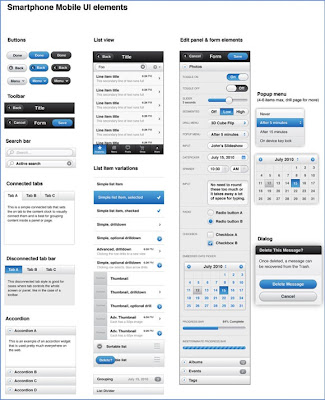
Some jQuery Mobile UI elements
But getting back to Adobe Creative Suite 5.5 Web Premium: with it, you can:
For a look at this new flexibility, click here to watch Adobe's Dreamweaver CS 5.5 creating a rich app for Apple's iPad.
Stay tuned!
jQuery mobile framework takes the "write less, do more" mantra to the next level: Instead of writing unique apps for each mobile device or OS, the jQuery mobile framework will allow you to design a single highly branded and customized web application that will work on all popular smartphone and tablet platforms. Click here for more.
Basic features of jQuery Mobile include:
General simplicity
The framework is simple to use. You can develop pages mainly using markup driven with minimal or no JavaScript.
Progressive enhancement and graceful degradation
While jQuery Mobile leverages the latest HTML5, CSS3, and JavaScript, not all mobile devices provide such support. jQuery Mobile philosophy is to support both high-end and less capable devices, such as those without JavaScript support, and still provide the best possible experience.
Accessibility
jQuery Mobile is designed with accessibility in mind. It has support for Accessible Rich Internet Applications (WAI-ARIA) to help make web pages accessible for visitors with disabilities using assistive technologies.
Small size
The overall size of the jQuery Mobile framework is relatively small at 12KB for the JavaScript library, 6KB for the CSS, plus some icons.
Theming
The framework also provides a theme system that allows you to provide your own application styling.
Some jQuery Mobile UI elements

But getting back to Adobe Creative Suite 5.5 Web Premium: with it, you can:
- Manage content for different screen sizes.
- Develop apps for virtually any mobile device.
- Ensure design integrity across the entire web.
For a look at this new flexibility, click here to watch Adobe's Dreamweaver CS 5.5 creating a rich app for Apple's iPad.
Stay tuned!
Tuesday, May 25, 2010
HTML5 - its support in Dreamweaver CS5, Internet Explorer 9 and elsewhere
With HTML5, an open Web standard, the browser becomes a first class RIA citizen.
HTML5 is being developed as the next major revision of HTML (HyperText Markup Language), the core markup language of the World Wide Web. HTML5 is the proposed next standard for HTML 4.01, XHTML 1.0 and DOM Level 2 HTML. It aims to reduce the need for proprietary plug-in-based rich internet application (RIA) technologies such as Adobe Flash and Microsoft Silverlight.
The HTML5 video tag is a markup language tag, introduced in the HTML5 draft specification, that adds support for embedding video in an HTML page.
The Adobe Flash Player has been and continues to be widely used to embed video on web sites such as YouTube, since the majority of web browsers have Adobe's Flash Player installed (with controversial exceptions such as the browser on the Apple iPhone and iPad). Now, however, HTML5 video is intended by its creators to become the new standard way to show video online, but has been hampered by lack of agreement as to which video formats should be supported in the video tag.
Rather than relying on the browser plug-in Flash, Apple has adopted HTML5, CSS and JavaScript – all open standards. Apple’s mobile devices now ship with high performance, low power implementations of these open standards.
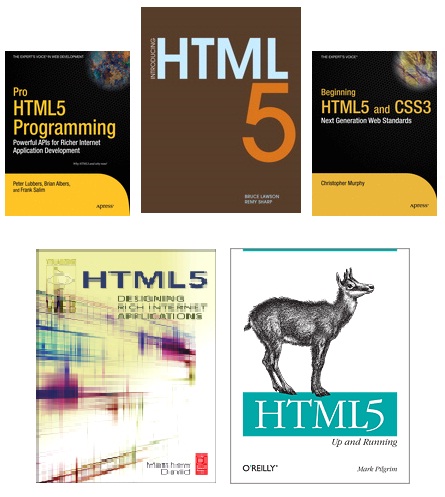
Not to be left out, Adobe has recently added HTML5 support to Dreamweaver CS5. This move should not be viewed only in light of the company's war of words with Apple regarding Flash, but in the other reality that HTML5 is reaching critical mass as evidenced by long-time holdout Microsoft adding HTML5 support to Internet Explorer 9 and a slew of HTML5 books being published by leading houses this summer. I've pictured the covers of a few of them at the end of this post.
These developments come despite the fact that HTML5 is still a work in progress. Even so, HTML5 in Dreamweaver CS5 makes for a mighty application development tool, as shown in the video http://www.youtube.com/watch?v=OEXrd8CR5AY
The HTML5 compatibility pack for Dreamweaver CS5 lets you author CSS3 and HTML5 compatible Web pages for modern browsers. And, of course, it supports the audio and video tags.
Note: The HTML5 extension will work only with Dreamweaver CS5 and not with any of the previous versions.
For more on this new Dreamweaver HTML5 support, check out labs.adobe.com and the following videos:
HTML5 Fundamentals with Dreamweaver CS5 - Semantic Structural Tags - Part 1
HTML5 Fundamentals with Dreamweaver CS5 - Semantic Structural Tags - Part 2
Readers of this blog who are interested in the Semantic Web may find the Part 2 video of particular interest.
HTML5 Fundamentals with Dreamweaver CS5 - Using the Video Tag
Finally, Microsoft will support HTML5 and CSS3 in Internet Explorer 9.0. A developer preview of their next browser can be downloaded from
http://ie.microsoft.com/testdrive/
and click here for a discussion of I.E. 9's support for video content.
Note: There has been a lot of interest and debate about HTML5 and its support for video tags. This release of Internet Explorer provides such support, with tags available for H.264/MPEG4 and MP3/AAC codecs, leaving out support for the open source Ogg Vorbis and Ogg Theora video codecs.

A final note: HTML5 is not likely to displace Adobe Flash videos any time soon. As evidence of this, consider the latest news from Dell: Dell Inc. yesterday unveiled plans for a computer tablet based on Google Inc.’s Android operating system.
Called Streak, the tablet will have a 5-inch screen, Wi-Fi, Bluetooth, and work on a 3G network. Users can download music; interact with social-networking sites; send e-mail, text and instant messages; and make phone calls. It has turn-by-turn navigation with Google Maps, a 5-megapixel camera with flash, and a removable battery.
Streak will have 2 gigabytes of internal storage. Memory can be expanded up to 32 gigabytes allowing it to store as many as 42 movies or 16,000 songs.
Later in the year, the tablet will support Adobe Flash 10.1 — something Apple Inc.’s iPhone, iPad, and iPod Touch devices do not. Flash is widely used for online video.
The Streak is designed to be larger than a smartphone but more portable than a laptop. It is 6 inches wide, nearly 3 inches high, and half an inch thick.
HTML5 is being developed as the next major revision of HTML (HyperText Markup Language), the core markup language of the World Wide Web. HTML5 is the proposed next standard for HTML 4.01, XHTML 1.0 and DOM Level 2 HTML. It aims to reduce the need for proprietary plug-in-based rich internet application (RIA) technologies such as Adobe Flash and Microsoft Silverlight.
The HTML5 video tag is a markup language tag, introduced in the HTML5 draft specification, that adds support for embedding video in an HTML page.
The Adobe Flash Player has been and continues to be widely used to embed video on web sites such as YouTube, since the majority of web browsers have Adobe's Flash Player installed (with controversial exceptions such as the browser on the Apple iPhone and iPad). Now, however, HTML5 video is intended by its creators to become the new standard way to show video online, but has been hampered by lack of agreement as to which video formats should be supported in the video tag.
Rather than relying on the browser plug-in Flash, Apple has adopted HTML5, CSS and JavaScript – all open standards. Apple’s mobile devices now ship with high performance, low power implementations of these open standards.
Not to be left out, Adobe has recently added HTML5 support to Dreamweaver CS5. This move should not be viewed only in light of the company's war of words with Apple regarding Flash, but in the other reality that HTML5 is reaching critical mass as evidenced by long-time holdout Microsoft adding HTML5 support to Internet Explorer 9 and a slew of HTML5 books being published by leading houses this summer. I've pictured the covers of a few of them at the end of this post.
These developments come despite the fact that HTML5 is still a work in progress. Even so, HTML5 in Dreamweaver CS5 makes for a mighty application development tool, as shown in the video http://www.youtube.com/watch?v=OEXrd8CR5AY
The HTML5 compatibility pack for Dreamweaver CS5 lets you author CSS3 and HTML5 compatible Web pages for modern browsers. And, of course, it supports the audio and video tags.
Note: The HTML5 extension will work only with Dreamweaver CS5 and not with any of the previous versions.
For more on this new Dreamweaver HTML5 support, check out labs.adobe.com and the following videos:
HTML5 Fundamentals with Dreamweaver CS5 - Semantic Structural Tags - Part 1
HTML5 Fundamentals with Dreamweaver CS5 - Semantic Structural Tags - Part 2
Readers of this blog who are interested in the Semantic Web may find the Part 2 video of particular interest.
HTML5 Fundamentals with Dreamweaver CS5 - Using the Video Tag
Finally, Microsoft will support HTML5 and CSS3 in Internet Explorer 9.0. A developer preview of their next browser can be downloaded from
http://ie.microsoft.com/testdrive/
and click here for a discussion of I.E. 9's support for video content.
Note: There has been a lot of interest and debate about HTML5 and its support for video tags. This release of Internet Explorer provides such support, with tags available for H.264/MPEG4 and MP3/AAC codecs, leaving out support for the open source Ogg Vorbis and Ogg Theora video codecs.
A final note: HTML5 is not likely to displace Adobe Flash videos any time soon. As evidence of this, consider the latest news from Dell: Dell Inc. yesterday unveiled plans for a computer tablet based on Google Inc.’s Android operating system.
Called Streak, the tablet will have a 5-inch screen, Wi-Fi, Bluetooth, and work on a 3G network. Users can download music; interact with social-networking sites; send e-mail, text and instant messages; and make phone calls. It has turn-by-turn navigation with Google Maps, a 5-megapixel camera with flash, and a removable battery.
Streak will have 2 gigabytes of internal storage. Memory can be expanded up to 32 gigabytes allowing it to store as many as 42 movies or 16,000 songs.
Later in the year, the tablet will support Adobe Flash 10.1 — something Apple Inc.’s iPhone, iPad, and iPod Touch devices do not. Flash is widely used for online video.
The Streak is designed to be larger than a smartphone but more portable than a laptop. It is 6 inches wide, nearly 3 inches high, and half an inch thick.
Sunday, April 4, 2010
How Green Is My iPad? & Who Were The Luddites?
How Green Is My iPad?
Click here for a discussion which ends with the assertion "All in all, the most ecologically virtuous way to read a book starts by walking to your local library."
Who Were The Luddites?
Machine smashers of the 19th century or members of a fascinating social movement with visionary insights into the unfolding drama of industrialization?
The impact of today's technologies on social relations and the planet itself is becoming an intriguing field of inquiry. However so far the discussion of nuclear power, biotechnology, deforestation, automobiles or computers is pretty much dominated by industry and government who want us to take all this for granted.
In this context it is inspiring to remember the Luddites who questioned industrial civilization at its very beginning in England during the introduction of mechanized textile mills. They knew that the power-looms that they selectively destroyed were not just a technology but would create a whole new set of relations: Factory work, child labor, and the demise of artisan and skilled labor. They anticipated that the new machines, that they themselves had helped build, were not the promised tool to help them in their work but would eventually become part of a machine culture with power over human life and even human consciousness.
Click on the links below for a two part talk given by Iain Boal, an independent scholar and historian of technology. He taught a course on the Luddites at Stanford University.
Note: During the introduction, you'll hear the term Time of Useful Consciousness. This is an aeronautical term. It's the time between the onset of oxygen deficiency and the loss of consciousness, the brief moments in which a pilot may save the plane.
Part 1: http://WaldenITech.com/Luddites1.mp3
Part 2: http://WaldenITech.com/Luddites2.mp3
Note: The download of these audio files could take several minutes, depending on the speed of your connection and other resources.
Subscribe to:
Posts (Atom)